
Kemper Tentative Versus Actual Release
The exact label on an MDOC detail record is Tentative Release Date. Tentative means calculated and subject to change. It is not an appointment, a promise, or proof that a person has crossed out of custody. Read that field with Location, Unit, Entry Date, Location Change Date, number of sentences, total sentence length, and the offense data. A future date beside an institution shows the person remains confined.
A blank tentative field does not mean release. It can appear with life or death terms, unresolved computation, or other sentence conditions. Actual release requires a later status change, an MDOC release or discharge record, a parole or supervision record when applicable, or confirmation from the custodian. For a Kemper jail booking, the sheriff's exact release timestamp records an exit from that booking, but it still does not prove that no receiving agency or other hold exists.
Note: A future tentative date paired with a facility location means the person remains in custody despite the forecast.
Find a Kemper Release Date
The proper search path depends on whether the sentence belongs to MDOC, a Kemper County court and jail, or another authority. Physical placement at the regional facility does not settle that question because the complex can house county, joint county-state, and state prisoners. Use the MDOC number or booking number to keep separate custody episodes from being mixed.
- Identify the legal custodian and whether the person is awaiting trial, serving a county term, or serving an MDOC sentence.
- For an MDOC sentence, open the MDOC Inmate Search and search by MDOC ID when possible.
- Compare date of birth, county of conviction, photograph, offense, sentence, Location, and Unit before reading the Tentative Release Date.
- For a county detainee or county sentence, check the commitment and court orders, then ask the sheriff for the current time or release record.
- Check parole or earned-release supervision separately when the forecast points to community placement rather than final discharge.
- Recheck close to the date and obtain the actual release, transfer, or discharge record after the event.
A person held before trial normally has no computed sentence-release date. Bond can authorize release in one case, but another warrant, detainer, or charge may prevent exit. The signed court order explains legal authority; the jail record or receiving-agency record shows whether the custody event was carried out. The Kemper County release search explains the broader path for a named person.
The official MDOC search screen accepts a first name, last name, or MDOC ID number.
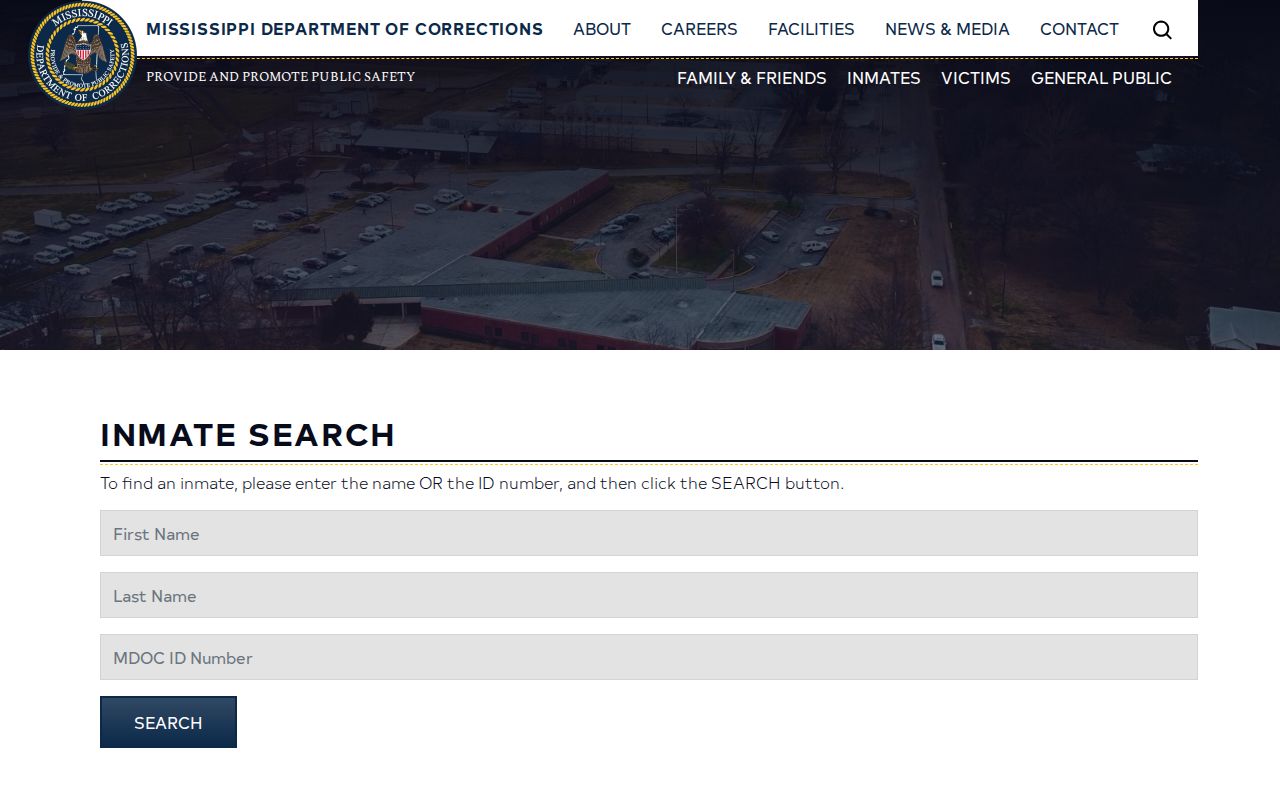
The MDOC ID is the best starting field because name-only searches can return people with similar names.
Read Kemper MDOC Date Fields
An MDOC detail can show much more than one date. Entry Date helps place the start of the state record. Location and Unit identify present placement, while Location Change Date marks a movement or data change. Sentence count, total length, offense, sentence date, and county of conviction help explain why a simple calendar estimate is unsafe. The public record also contains a photograph and physical descriptors for identity comparison.
| MDOC field | How to read it |
|---|---|
| Tentative Release Date | A current forecast, not an actual exit timestamp |
| Location and Unit | The recorded placement that must be read with the date |
| Location Change Date | A recorded change in placement, not necessarily community release |
| Number of Sentences | A warning that several terms may affect the computation |
| Total Length | The sentence structure reported by MDOC, before assuming any credit |
| County of Conviction | The court source for judgments, amendments, and jail-credit support |
The official MDOC detail layout demonstrates the precise Tentative Release Date wording and its surrounding status fields.
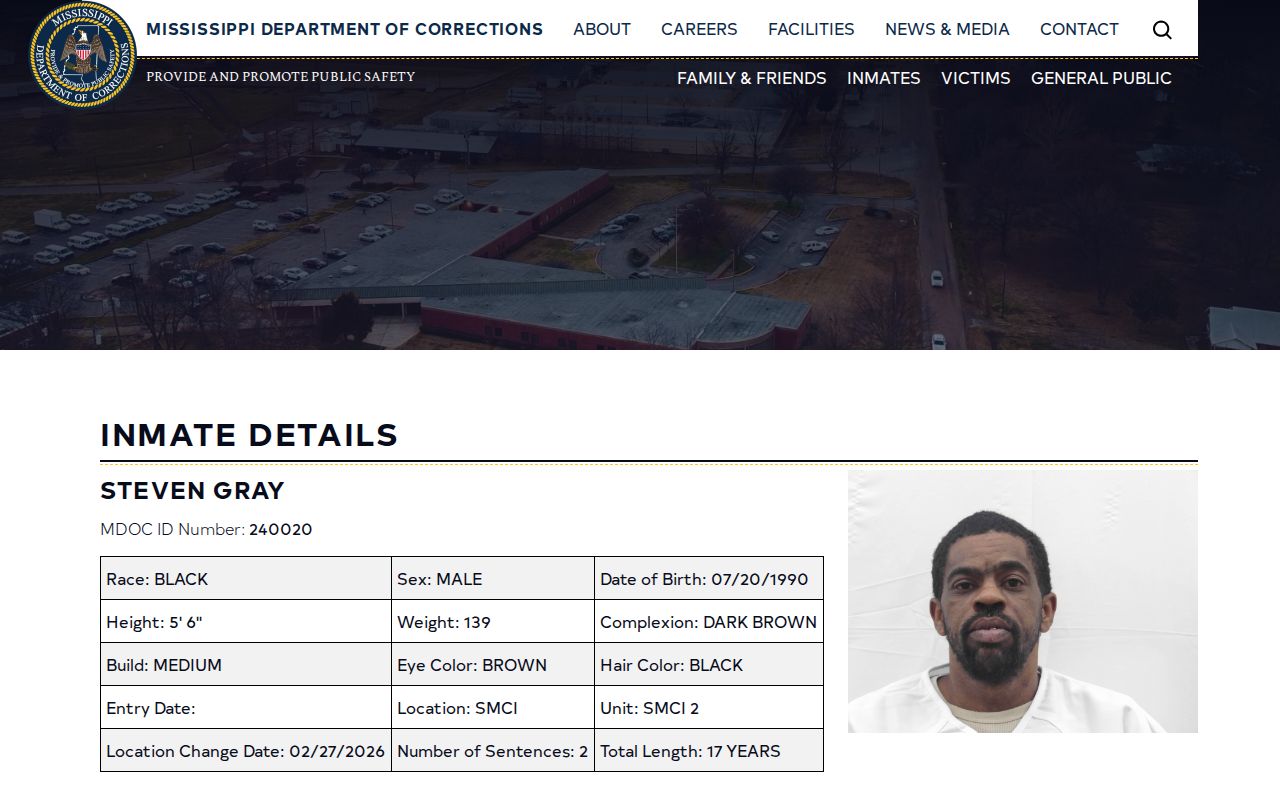
That layout is the model for careful reading: identity, location, sentence data, and the tentative date belong together.
Kemper MDOC Earned-Time Rules
Mississippi Code Section 47-5-138 is the source behind the common 85% shorthand for qualifying state sentences imposed after June 30, 1995. Ordinary earned time may accrue at 4.5 days for each 30 days served, and the ordinary allowance is capped at 15% of the sentence under the statute. That does not guarantee release after 85%. Eligibility, conduct and performance findings, sentence terms, and statutory exclusions still control.
Section 47-5-138.1 separately addresses trusty earned time, potentially allowing 30 days of reduction for 30 days in an approved program. It contains exclusions, including specified life, habitual, sex, trafficking, and mandatory-parole-time categories. Section 47-5-139 also sets exclusions relevant to earned time. Sentence date and offense matter, so no individual date should be calculated from one percentage or one statute line.
Under the state framework, an eligible early placement may be earned-release supervision through sentence expiration. The person keeps inmate status and MDOC jurisdiction and is supervised in a way similar to parole. Revocation can return the person to confinement. “Released on ERS” therefore does not mean fully discharged.
The published earned-time statute shows why the cap must be read with all eligibility terms.
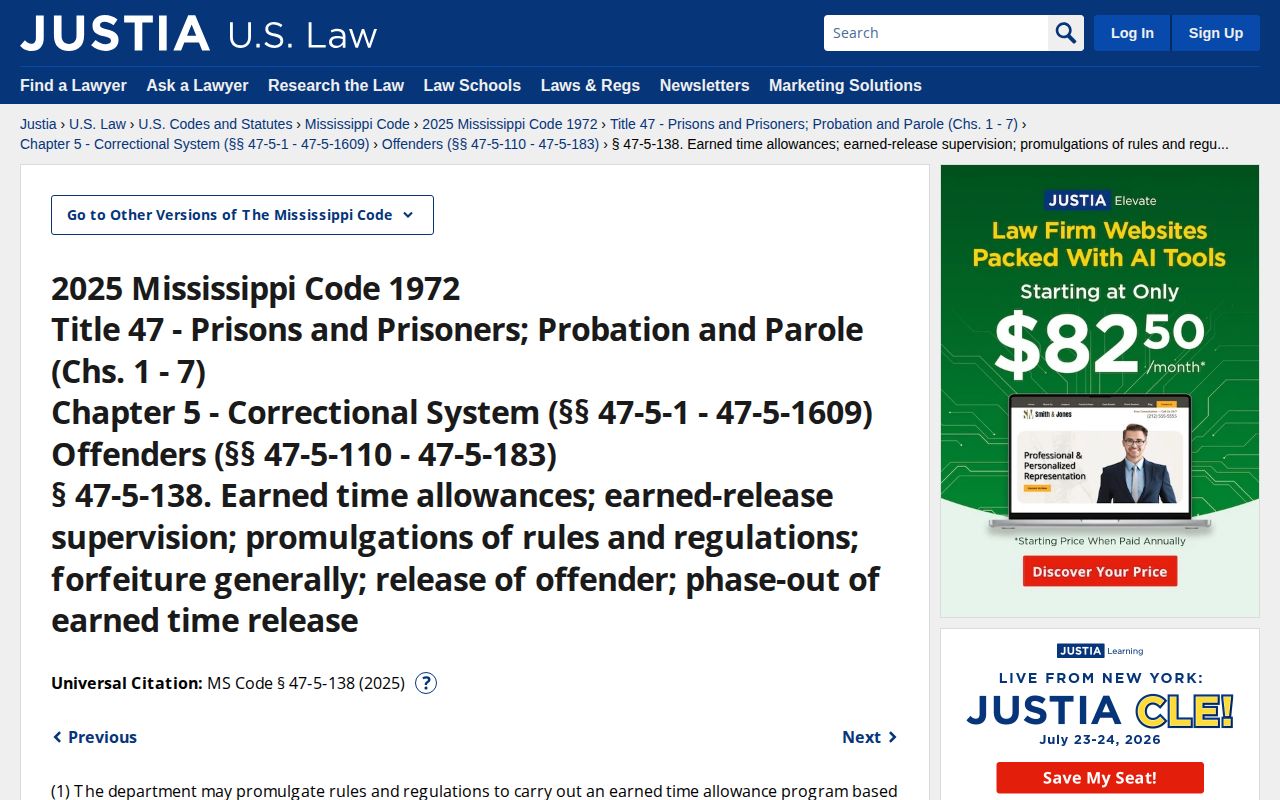
The statute supplies a state-prison rule, not a calculator for every person held in the Kemper County facility.
Kemper County Sentence Computation
No verified Kemper County jail good-time formula was found. MDOC earned-time law applies in its stated state-correctional context and cannot automatically be placed onto a local jail sentence. For a county term, obtain the commitment order, credited days, jail time sheet, facility policy, and any later court order. Ask the jail or clerk for the existing computation rather than asking for a new hypothetical date.
Eligible presentence jail credit can affect an MDOC sentence-begin date. The MDOC handbook says the department obtains qualifying credit from the county of conviction. A missing or corrected credit record can therefore move the tentative date. Match the court case number, dates of confinement, and commitment record. If a correction is needed, give the custodian the precise field and supporting court or agency document.
Why Kemper Release Dates Change
A tentative date changes when the facts used in its computation change or when a later legal or custody event controls the release. Some changes can move the date earlier. Others can delay community placement or replace it with a transfer. The displayed date alone rarely explains which factor changed.
| Factor | Possible effect | Best source |
|---|---|---|
| Jail credit correction | Changes the sentence-begin calculation | Court order, county credit record, MDOC time sheet |
| Concurrent or consecutive terms | Changes how several sentences run | Judgment and MDOC computation |
| Earned-time loss or restoration | Moves the current forecast | MDOC time-computation record |
| New or amended court order | Changes a sentence term or credited period | Filed court order and updated MDOC record |
| Parole action or rescission | Changes possible community placement | Board action record and MDOC status |
| Detainer or another hold | Can lead to continued or transferred custody | Custodian and receiving-agency records |
| ERS revocation | Can return the person to confinement | MDOC supervision and revocation records |
A parole grant is not an actual release timestamp. A release plan, detainer, recalculation, rescission, or administrative work can remain. Likewise, a court order in one case does not clear an unrelated hold. Compare case and custody records before stating that the person should have left.
When a date changes, compare the old and new detail only after confirming it is the same MDOC record. Record the MDOC number, the date observed, Location, Unit, Location Change Date, and the tentative field. Then ask for the existing time sheet and date history, if maintained. That request can show which source credit, judgment, or corrections entry changed without asking staff to create a new explanation.
Note: Ask for the existing computation history when a tentative date changes instead of asking staff to recreate the calculation.
Kemper Parole Date Limits
Parole eligibility, a Board decision, and actual release are three separate points. Mississippi Code Section 47-7-3 controls eligibility through detailed rules tied to the offense, sentence date, sentence, prior status, and exclusions. Eligibility means the person may be considered. It does not mean parole was granted, and it does not supply a certain exit date. No one-quarter formula should be used as a universal prediction.
Research found no verified public Mississippi Parole Board inmate-level hearing calendar or decisions search. For a specific case, compare the MDOC detail and Parolee Search, then contact the Board or request the hearing notice, action sheet, and final decision. Even a grant can be followed by a release-plan review, detainer, recalculation, rescission, or processing period. Confirm the executed event through MDOC custody or supervision information.
Confirm Kemper Actual Release
Recheck the MDOC detail near the tentative date and compare Location and Unit. If parole is expected, search the separate Parolee Search and contact the Kemper Probation & Parole Office when a match is unclear. MS SAVIN can provide a release or transfer notice from a participating reporting agency, but a notice supplements the source record. The Kemper VINE inmate check explains person-specific alert steps and limits.
If the public MDOC search no longer finds a former state prisoner, do not assume the search is a complete archive of every discharged person. Call MDOC with the full name, MDOC number, and date of birth, check the sentencing court, and submit a written request. MDOC states that records requests must be written and uses its general-public records page and portal.
A precise request asks for custody history, the time-computation sheet, current or final tentative date, actual release date and type if released, supervision status, and discharge record. Ask for the source dates and credits used to establish the sentence-begin date. For county custody, seek the booking-release record, jail docket, release screen, and any receiving-agency field. These records distinguish a forecast from what happened.
The court route can explain the source terms behind the calculation. Ask the correct clerk for the docket and filed judgment, sentencing order, any order awarding time served, later amendment, revocation, or termination. A docket summary may shorten the event, so obtain the signed order when its wording matters. Pair it with the custodial record because a court action in one case does not prove that another hold was cleared.
The MDOC records route explains that requests to inspect or obtain records are submitted in writing rather than by telephone.
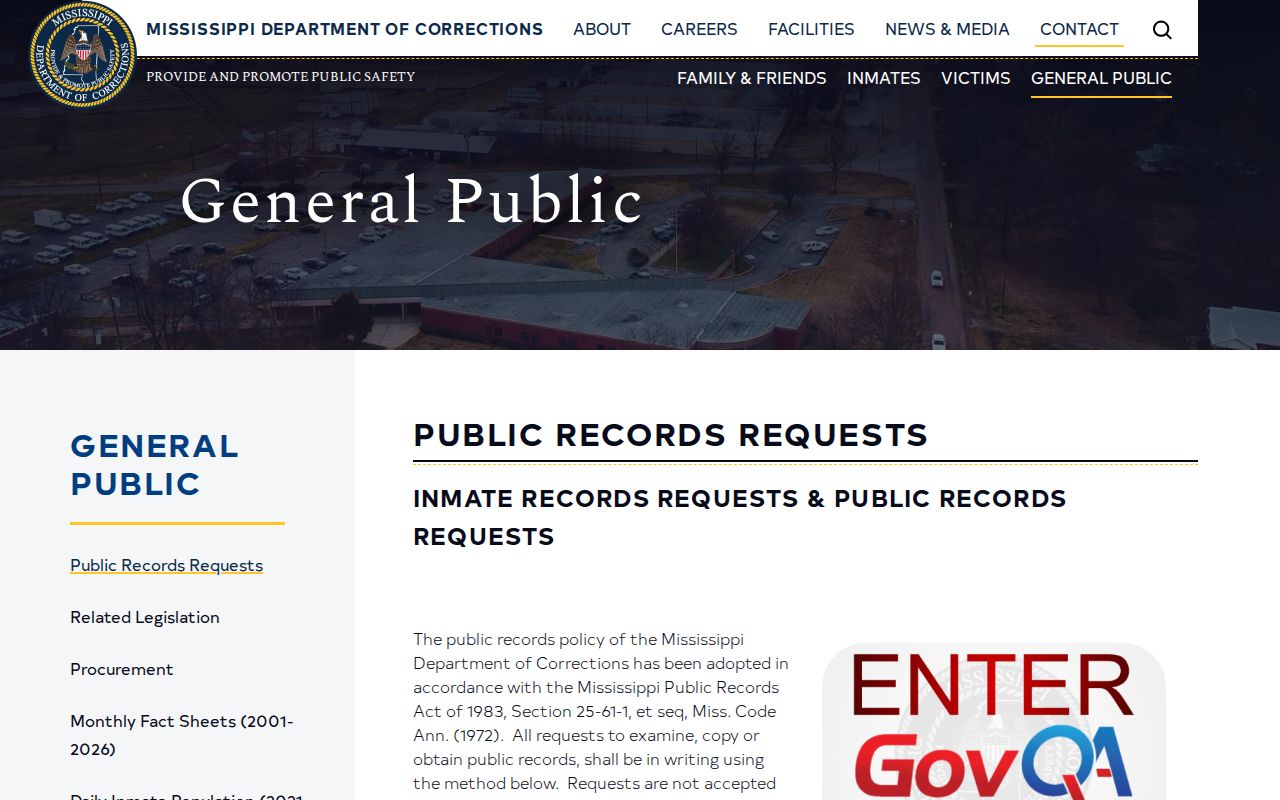
A written request is the durable fallback when the public date changed, disappeared, or does not explain the actual custody event.