
Kemper/Neshoba Release Destinations
A person can leave the Kemper/Neshoba County Regional Correctional Facility without leaving custody. That point governs every release check at this mixed regional complex. A local detainee may go into the community after bond, dismissal, or time served. Another person may transfer to an MDOC prison, another county, federal custody, or immigration custody. A state prisoner may leave on parole or earned-release supervision, while a different state prisoner may simply move to another MDOC unit. The physical exit looks similar from outside the gate, but the legal status is not.
The strongest first record depends on the authority. For a Kemper County booking, the sheriff's rolling 48-hour Released view records a local exit with a booking number and exact timestamp. For a state prisoner, the MDOC detail record shows Location and Unit, and the separate Parolee Search can show community supervision. A transfer record proves continued custody. A discharge record is needed to establish that MDOC jurisdiction ended.
| Possible destination | Best confirming source | What it means |
|---|---|---|
| Community after local booking | Sheriff release record and court order | The local booking ended, subject to any other hold |
| Another MDOC unit | MDOC Location and Unit | Custody continued after leaving Kemper |
| Parole or ERS | MDOC and Parolee Search | Community placement remains supervised |
| Federal or ICE custody | Receiving agency record | The facility exit was a transfer, not freedom |
Kemper/Neshoba Mixed Custody Records
The sheriff and MDOC describe the same Stennis Industrial Park Road complex from different operational views. The public roster uses the name Kemper County Detention Center. The sheriff jail page and MDOC identify the Kemper/Neshoba County Regional Correctional Facility. Those names should not be treated as two separate public rosters. The facility houses county, joint county-state, and state populations under a regional agreement, with county operation and MDOC oversight.
The Kemper County sheriff's facility page describes allocations of 355 state beds, 50 joint county-state beds, and 75 county beds. These are operating allocations, not a current census and not release totals. The numbers matter because they show why one roster disappearance can have several explanations. A county arrestee and an MDOC prisoner may share a physical site while remaining subject to different records, rules, and release authorities.
The official sheriff facility page shows the local operating description below.
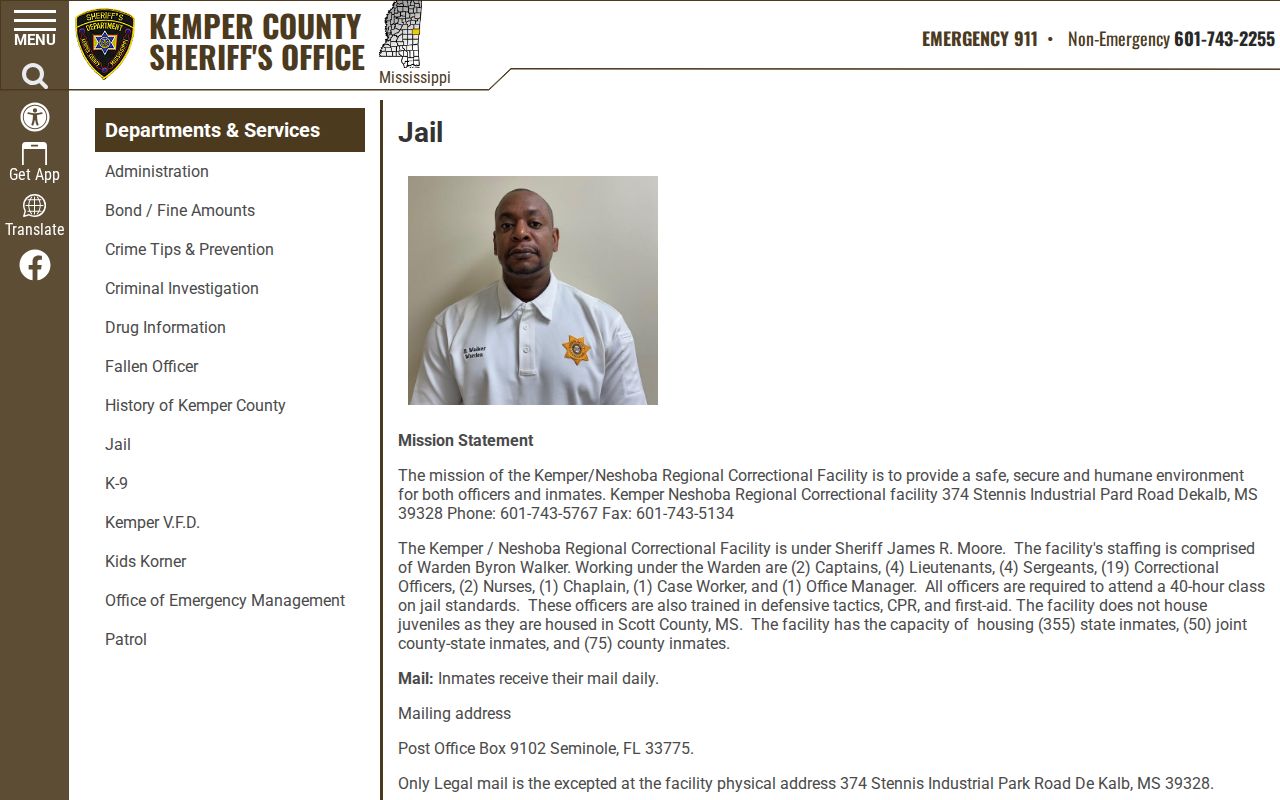
That source ties the complex to the sheriff while explaining the populations held there. It does not turn every departure into a community release.
Confirm a Kemper/Neshoba Release
Start with the last known legal authority, not just the building name. Use the booking number for a county case or the MDOC number for a state sentence. Names alone can match more than one person, and the same person can have more than one booking episode. Read the date beside the status. A future tentative date is a forecast, while a sheriff release timestamp records an exit from one local booking.
- Check the sheriff's 48-hour Released view for a local booking. Save the exact name, booking number, booking time, and release time.
- If no matching release appears, search the MDOC Inmate Search by name or MDOC ID. Compare the date of birth, county of conviction, Location, and Unit.
- When parole is expected, check the MDOC Parolee Search. A match supports supervision, not final discharge.
- Use the court docket and signed order to learn the legal basis, then obtain the jail or MDOC record to confirm that the custody event occurred.
- Call the facility or records custodian when the sheriff and MDOC systems conflict, or when a destination remains unclear.
A person who drops off the Kemper County current roster may have transferred. Roster absence alone does not establish release to the community.
The full county search and request paths are covered in the Kemper County released-inmate lookup. That route also separates county, state, federal, and immigration custody.
Kemper/Neshoba Release Record Contacts
Use the regional facility number for questions about the physical site and the sheriff line for the public booking roster. The addresses differ because the regional building and sheriff's public office are listed separately. The difference does not prove two detention systems. Ask which office is the custodian of the specific booking or state record before sending private identifiers.
Kemper/Neshoba County Regional Correctional Facility
374 Stennis Industrial Park Road
DeKalb, MS 39328
601-743-5767
Kemper County Sheriff's Office
330 Stennis Industrial Park Road
DeKalb, MS 39328
601-743-2255, 24-hour line
601-743-4880, Monday through Friday, 8 a.m. to 5 p.m.
The sheriff's ordinary contact form is not a dedicated records form, is not monitored around the clock, and warns against sending sensitive data by plain email. Call for the proper submission route. A focused request should identify the booking episode and seek the existing booking sheet, release screen or report, jail-docket entry, release-type field, receiving-agency field, and booking photo. Ask for electronic copies and a cost estimate. No verified county per-page fee was available, so the custodian must quote the charge.
MDOC Releases from Kemper/Neshoba
A state prisoner's record belongs in the MDOC path even when the person is housed at Kemper/Neshoba. The public MDOC detail layout can show an MDOC ID, Entry Date, Location, Unit, sentence facts, a photograph, and Tentative Release Date. Location and the date must be read together. An institution shown as the Location or Unit indicates placement in custody, and a tentative date is not proof that release processing finished.
The MDOC regional-facility page confirms the county-operated regional model and the facility contact.
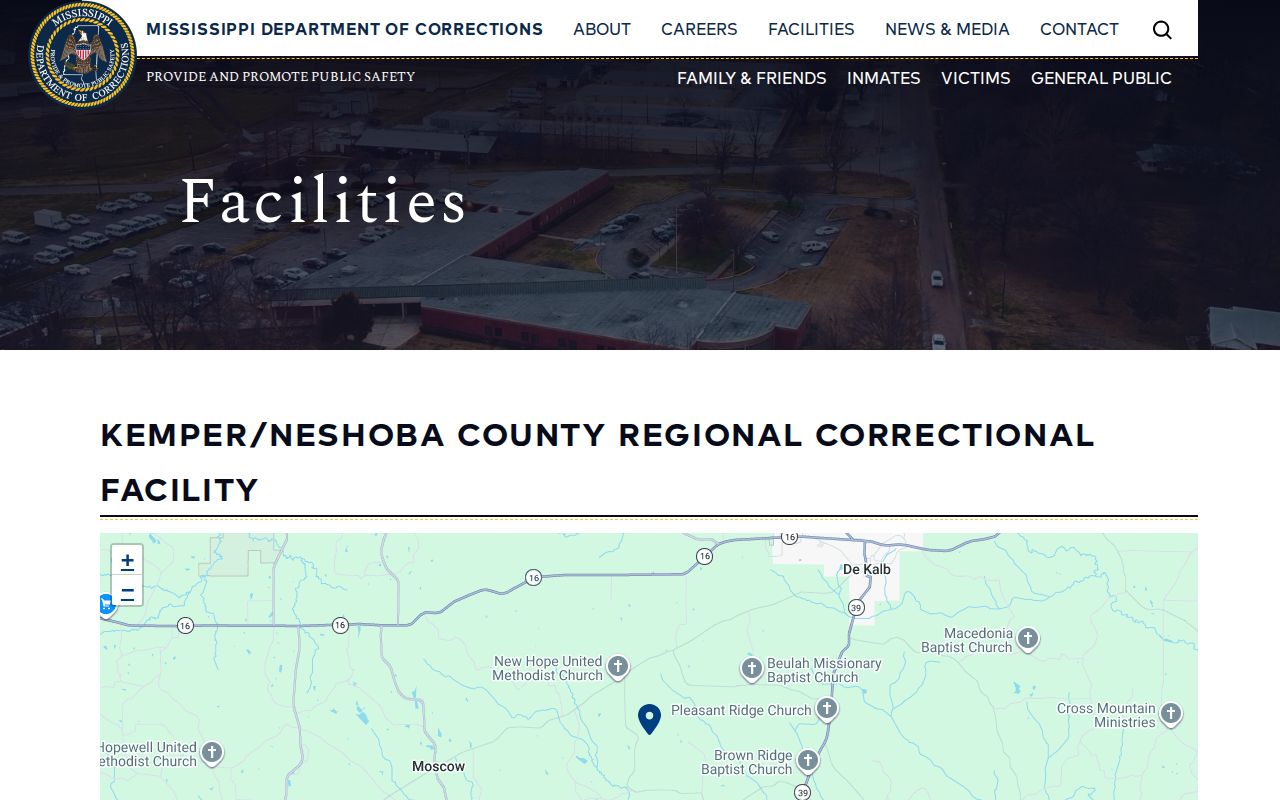
The MDOC listing supplies the state correctional context that the county booking feed cannot. For a full discharge or time-computation history, use the MDOC written records portal rather than relying on a missing or changed public result.
Earned-release supervision, often shortened to ERS, also needs care. A person on ERS keeps inmate status and remains under MDOC jurisdiction even while living in the community. Parole is another form of conditional release. Neither status equals final discharge. If the public record is unclear, request the custody history, time-computation sheet, actual release date and type, and current supervision or discharge status.
Kemper/Neshoba Facility Operations
The regional model is the defining local fact. MDOC explains that Mississippi regional facilities operate under the sheriff of the county through agreements with the state and receive MDOC oversight. At Kemper/Neshoba, that arrangement joins local bookings and state correctional placements at one complex. It is why the sheriff roster and MDOC search cannot replace each other.
- Booking release
- An exit recorded for one county booking. It does not rule out another hold.
- Transfer
- Movement to another custodian or location while confinement continues.
- Parole
- Conditional community release authorized through the Parole Board.
- Discharge
- The end of the correctional sentence or supervision shown by the controlling record.
The sheriff also describes a Joint County Work Center whose participants perform road cleanup and repair work for churches. Work outside a secure perimeter is a program fact, not a release event. Confirm the person's status through the roster, MDOC, and the controlling record rather than treating a work assignment as freedom.
Note: Facility programs and custody placements can change, so verify the current authority and location before drawing conclusions from an older record.
Kemper Juvenile Release Limits
The sheriff states that juveniles are not housed at the adult regional facility and instead are placed in Scott County. The official Kemper source does not name a specific juvenile building. It would be inaccurate to assign a child to a guessed facility or use the adult 48-hour list to claim a juvenile release.
Juvenile records and proceedings have added confidentiality limits. A parent, lawyer, or other properly authorized person should work through the responsible juvenile court or agency. Public adult roster tools do not establish a juvenile's custody, transfer, or release. This boundary is part of an accurate facility search, not a missing feature. Ask the responsible agency which records may be disclosed and what proof of authority it requires before seeking any case detail.